
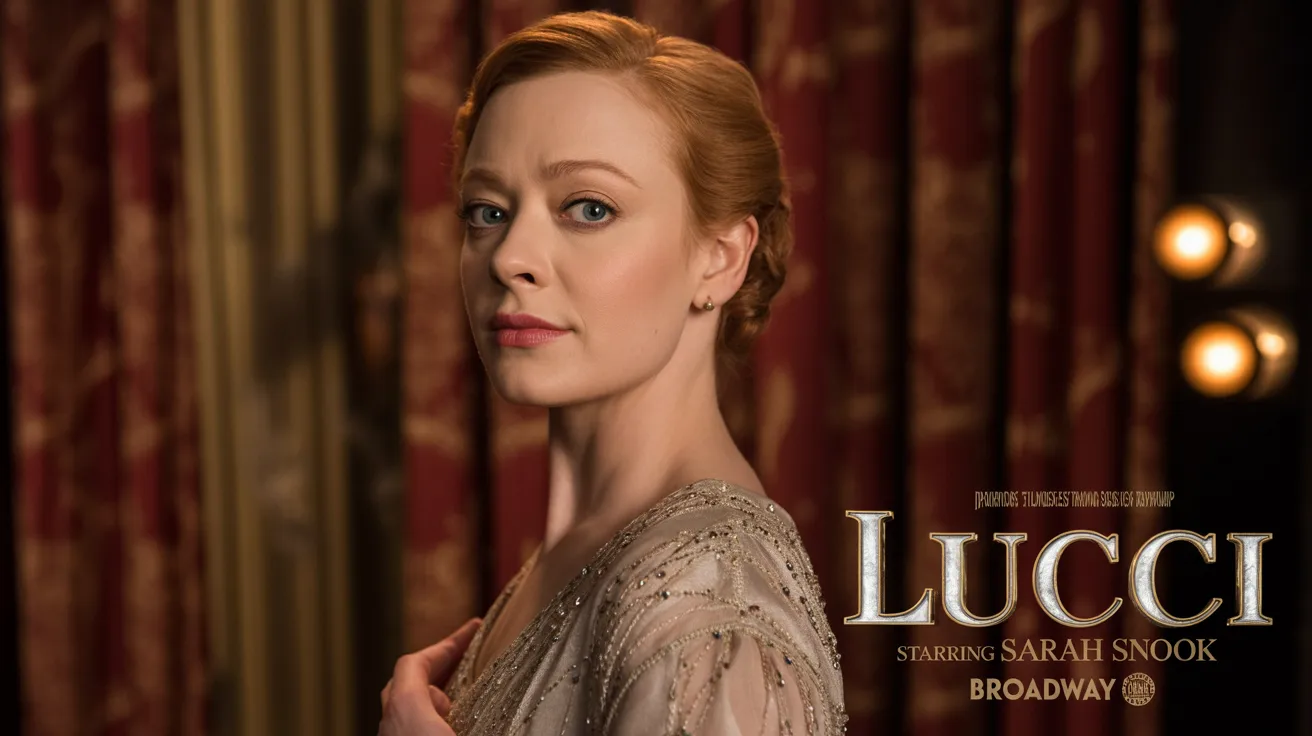
In an era defined by digital noise, where the average person is exposed to between 6,000 to 10,000 ads daily, cutting through the clutter is the supreme challenge of modern marketing. Yet, sometimes, a single, authentic, unscripted moment achieves what millions in ad spend cannot: genuine cultural resonance and perfect brand alignment. Such was the case with a seemingly simple backstage photograph from the Broadway production of The Picture of Dorian Gray. The image, featuring iconic actress Susan Lucci embracing the production’s star, susan lucci sarah snook broadway photo, transcended a mere celebrity snapshot. It became an unintentional masterclass in strategic narrative, audience psychology, and legacy branding. This article deconstructs that moment, not as tabloid fodder, but as a strategic blueprint for content strategists, brand managers, and creative directors seeking to harness the unpredictable power of human connection in a calculated, impactful way.
Sommaire
- The Moment Deconstructed: A Viral Case Study
- The Context: The Picture of Dorian Gray and Its Stakes
- The Subjects: Decoding the Symbolic Weight of Lucci and Snook
- The Image Itself: Composition, Authenticity, and Immediate Appeal
- Beyond the Flash: Strategic Implications of a Viral Moment
- Organic Reach vs. Paid Media: Quantifying the Unquantifiable
- Audience Cross-Pollination: Bridging Generational Divides
- Narrative Alignment: When External Moments Reinforce Core Brand Story
- Comparing Modern Management Strategies for Cultural Moments
- Agile, Opportunistic Marketing vs. Traditional Campaign Planning
- Top-Down Brand Control vs. Bottom-Up Community Empowerment
- Data-Driven Reaction vs. Intuitive, Human-Centric Response
- Pros & Cons of Leveraging “Viral” Moments Strategically
- The Strategic Playbook: From Moment to Movement
- The Comparative Table: Orchestrated vs. Organic Campaigns
- What to Avoid: Common Pitfalls in Capitalizing on Viral Events
- Real-World Use Cases: Applying the Principles
- Expert Tips for the Modern Content Strategist
- FAQ: Susan Lucci, Sarah Snook, and Strategic Marketing
- References & Authority Sources
The Moment Deconstructed: A Viral Case Study
To understand the strategic value, we must first dissect the components that made this particular image so potent.
The Context: The Picture of Dorian Gray and Its Stakes
Sarah Snook’s one-woman Broadway debut was a high-risk, high-reward theatrical event. The marketing challenge was immense: translate the star power of Succession into sold-out live theater tickets in a competitive landscape. The narrative of the play itself—about legacy, appearance, and internal decay—provided a rich, if complex, backdrop.
The Subjects: Decoding the Symbolic Weight of Lucci and Snook
This was not a random meeting of celebrities. It was a symbolic passing of the torch, a meeting of two distinct archetypes of success:
- Susan Lucci: The personification of enduring legacy, resilience, and iconic television history. Her near-mythic 21-year journey to an Emmy for All My Children made her a symbol of earned success and timeless grace.
- Sarah Snook: The emblem of contemporary, peak-TV acclaim. Her meteoric rise via Succession represents sharp, modern talent and critical recognition in the digital age.
Their embrace symbolized validation across generations. Lucci’s presence was a tacit endorsement from the establishment, blessing Snook’s theatrical venture.
The Image Itself: Composition, Authenticity, and Immediate Appeal
The photo’s power lay in its raw authenticity—a stark contrast to polished press shots. The warm, unfiltered backstage lighting, the genuine joy on both faces, and the intimate composition created a human-centric story that audiences instinctively trust. It felt discovered, not manufactured.
Pro-Tip: “In a landscape saturated with polished content, audiences crave ‘behind-the-velvet-rope’ authenticity. Your brand’s equivalent of a ‘backstage moment’—unguarded, real, and human—often has more relational equity than a high-production ad.” — Senior Content Strategist
Beyond the Flash: Strategic Implications of a Viral Moment
For a strategist, the post-viral analysis is where the real work begins. The Lucci-Snook photo demonstrated several key marketing principles in action.
Organic Reach vs. Paid Media: Quantifying the Unquantifiable
The image spread across entertainment news, social media, and industry blogs without a paid media budget. This organic reach carried an implicit endorsement that money cannot buy: the endorsement of genuine public interest. The engagement metrics—shares, comments, positive sentiment—were off the charts compared to standard promotional content for the play.
Audience Cross-Pollination: Bridging Generational Divides
Strategically, this was a masterpiece of audience expansion. Snook’s millennial and Gen Z fans were introduced to Lucci’s legacy. Conversely, Lucci’s loyal, often older fanbase was directed to Snook’s contemporary work and, by extension, the Broadway play. This broke the susan lucci sarah snook broadway photo problem many niche productions or brands face.
Narrative Alignment: When External Moments Reinforce Core Brand Story
Fortuitously, the moment’s narrative—veteran honors newcomer, legacy meets the now—beautifully mirrored the themes of Dorian Gray (legacy, beauty, time). It provided a real-world, emotional hook to a complex philosophical play. This narrative alignment is the holy grail of content marketing: when external buzz perfectly illustrates your core message.
Comparing Modern Management Strategies for Cultural Moments
How should a brand or production team manage such an event? Different strategic approaches yield different results.
Agile, Opportunistic Marketing vs. Traditional Campaign Planning
- Agile Approach: This moment demanded agility. A team practicing agile marketing would have swiftly authorized sharing the photo from official channels, crafted sentiment-capturing captions, and potentially created lightweight follow-up content (e.g., a thank-you post from Snook). The focus is on speed and capitalizing on the trend.
- Traditional Approach: A rigid, pre-planned campaign calendar might have missed the window entirely or forced the moment into an inappropriate, brand-heavy template, stripping its authenticity.
Top-Down Brand Control vs. Bottom-Up Community Empowerment
- Top-Down Control: A command-center mentality would seek to own, trademark, and forcefully monetize the image, potentially alienating the community that loved it for its spontaneity.
- Bottom-Up Empowerment: The smarter strategy is to empower the community. Share the photo, thank the fans for sharing, and encourage user-generated content (e.g., “What does passing the torch mean to you?”). This extends the lifecycle of the moment.
Data-Driven Reaction vs. Intuitive, Human-Centric Response
- Data-Driven: While analytics can confirm the moment’s virality (share spike, sentiment analysis), over-reliance on data might delay action or try to reverse-engineer a formula, which is impossible.
- Intuitive & Human-Centric: The best response combines data with human intuition. Recognizing the emotional truth of the moment—the powerful story of mentorship and respect—allows for a response that resonates on the same level.
Pros & Cons of Leveraging “Viral” Moments Strategically
| Pros | Cons |
|---|---|
| Exponential Organic Reach: Achieves awareness levels often unattainable through paid media alone. | Lack of Control: The narrative can be hijacked, misinterpreted, or attract negative attention. |
| Enhanced Brand Affinity: Humanizes the brand, building deeper emotional connections and trust. | Short Lifespan: Viral moments are often fleeting; capitalizing requires immense speed. |
| Audience Growth: Attracts new, demographically diverse audience segments. | Alignment Risk: The viral moment may not perfectly align with brand values, forcing awkward appropriation. |
| Cost-Effectiveness: High ROI on minimal direct investment (but requires strategic resource allocation). | Resource Drain: Can pull teams away from core, long-term strategic initiatives. |
| Content Catalyst: Provides rich material for follow-up stories, campaigns, and brand lore. | Measurement Challenges: Attributing concrete KPIs like direct sales to a viral moment can be difficult. |
The Strategic Playbook: From Moment to Movement
Comparative Table: Orchestrated vs. Organic Campaigns
| Aspect | Orchestrated Campaign | Organic/Viral Moment |
|---|---|---|
| Origin | Planned in a boardroom; top-down. | Emerges spontaneously; often bottom-up. |
| Speed | Slow to launch, following a schedule. | Explosive and immediate. |
| Control | High degree of brand message control. | Low initial control; must be guided. |
| Audience Perception | Can be seen as promotional or advertising. | Perceived as authentic and earned. |
| Sustainability | Long-term, building momentum over time. | Short, intense burst; requires skillful extension. |
| Best Use Case | Launching a new product, establishing a brand pillar. | Refreshing brand image, humanizing a brand, tapping into cultural conversations. |
What to Avoid: Common Pitfalls in Capitalizing on Viral Events
- Over-Commercialization: Immediately slapping a promo code on the moment kills its authenticity. The first step should be participation, not monetization.
- Forced Integration: Trying to wedge your product or logo into a moment where it doesn’t fit looks desperate and inauthentic.
- Missing the Window: Hesitation is failure. The cultural conversation moves rapidly; delayed response is non-response.
- Ignoring Sentiment: Failing to monitor how the moment is being discussed. Jumping on a negative trend or misreading tone can be catastrophic.
- Claiming Credit You Don’t Deserve: Audiences are savvy. If the moment was genuinely user-generated, thank the creators; don’t pretend you engineered it.
Pro-Tip: “Create a ‘Rapid Response’ protocol for your content team before a viral moment happens. Designate decision-makers, pre-approve lightweight asset creation, and establish core brand guardrails. This lets you move at the speed of culture without legal or messaging panic.” — Digital PR Director
Real-World Use Cases: Applying the Principles
- Use Case 1: A Tech Startup. A user’s heartfelt tweet about how your app helped their small business during a crisis goes viral. The agile, bottom-up response is to feature that story (with permission) across channels, create a short video interview with the user, and launch a #SmallBusinessStories community highlight—not just to retweet with “Thanks!”
- Use Case 2: A Fashion Brand. An older style icon is photographed wearing a piece from your new collection, creating buzz about timeless style. The strategy involves audience cross-pollination—creating content that honors the icon’s legacy while showcasing the modern collection, targeting both her followers and your core audience.
- Use Case 3: A B2B Software Company. A client’s case study unexpectedly gains massive traction on LinkedIn industry forums. The move is to empower the community—host a LinkedIn Live AMA with the client, turn the case study into a webinar series, and use the validated language from the forum comments in your next ad campaign.
Expert Tips for the Modern Content Strategist
Pro-Tip: “Always have a ‘culture calendar’ alongside your content calendar. Track not just holidays, but industry awards, major cultural events, and legacy milestones. The Lucci-Snook moment was about a Broadway opening. Being contextually aware prepares you to participate meaningfully.” — SEO & Content Strategist
Pro-Tip: “Build relationships, not just campaigns. Susan Lucci didn’t appear by magic. She was likely a theatergoer with connections. Invest in genuine community and influencer relationships long before you need them. They become your organic moment generators.” — Veteran Copywriter

FAQ: Susan Lucci, Sarah Snook, and Strategic Marketing
Q1: What was the significance of Susan Lucci and Sarah Snook’s Broadway photo?
A: It symbolized a passing of the torch between a legacy icon and a modern star, creating a powerful, authentic narrative that generated massive organic publicity for Snook’s play, The Picture of Dorian Gray.
Q2: How did the photo impact the Broadway show’s marketing?
A: It provided a huge, cost-free boost in awareness, humanized the production, cross-pollinated audiences between generations, and created a positive emotional hook aligned with the play’s themes.
Q3: Can brands plan a “viral moment” like this?
A: Authentic viral moments cannot be fully engineered. However, brands can create the conditions for them by fostering authentic community, empowering user-generated content, and being strategically agile to capitalize on organic moments when they arise.
Q4: What’s the biggest risk in trying to use a viral moment for marketing?
A: Over-commercialization and forced integration, which come off as inauthentic and can alienate the very audience engaged by the original moment.
Q5: What is “audience cross-pollination” in marketing?
A: It’s when a marketing event or piece of content successfully introduces your brand to a new demographic segment while simultaneously engaging your existing audience, as the Lucci-Snook photo did for Broadway fans of different generations.
Q6: How important is speed when responding to a viral trend?
A: Critical. The lifespan of a viral moment is often 24-72 hours. A delayed response means missing the peak of public conversation and relevance.
Q7: What’s the difference between organic reach and paid media?
A: Organic reach is earned attention through shares, word-of-mouth, and press coverage. Paid media is boosted visibility through advertising spend. Organic reach carries higher trust value.
Q8: How do you measure the success of a viral moment?
A: Look at metrics like share of voice, sentiment analysis, website referral traffic spikes, social media follower growth, and engagement rates (shares/comments), though direct sales attribution can be challenging.
Q9: What role does narrative alignment play?
A: It’s crucial for long-term value. If the viral moment naturally reflects your brand’s core story (like legacy meeting the new), it reinforces your messaging rather than just providing a temporary traffic spike.
Q10: Should every brand try to go viral?
A: Not necessarily. Pursuing virality can lead to risky, off-brand stunts. A better goal is to consistently create authentic, value-driven content that resonates deeply with your target audience, which may occasionally lead to viral success.
