
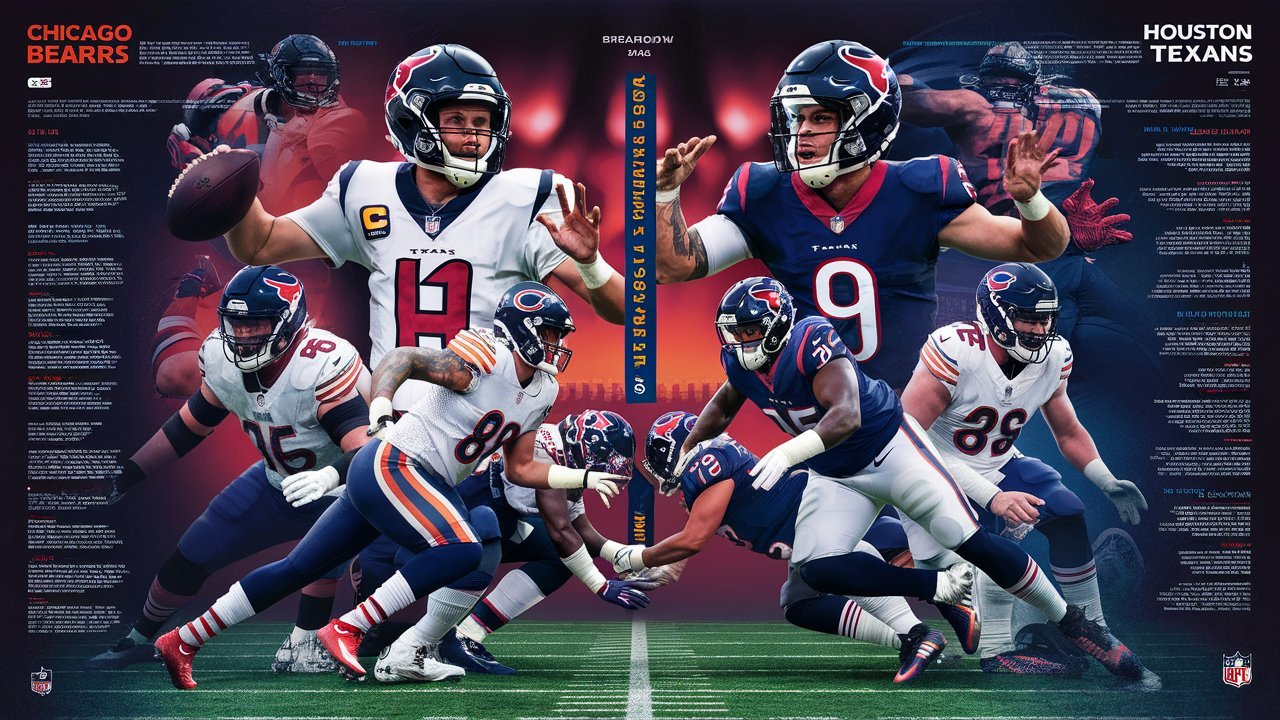
The Chicago Bears vs Houston Texans match delivered an intense blend of athleticism, tactical adjustments, and standout player performances that ignited debates among analysts and fans alike. In this comprehensive statistical and analytical deep dive, we explore player stats, team comparisons, offensive metrics, defensive highlights, and individual playmaking moments that shaped the matchup. Our goal is to provide an authoritative, data-driven breakdown that offers greater value, depth, and clarity for readers seeking premium football analysis.
Introduction to the Chicago Bears vs Houston Texans Match
The clash between the chicago bears vs houston texans match player stats was one that showcased evolving team identities, promising young talent, and strategic coaching decisions. With both franchises aiming to establish dominance early in the season, this match was a perfect canvas for standout performances on both sides of the ball. The game unfolded with powerful drives, defensive momentum swings, and remarkable plays that provided rich statistical material for dedicated NFL followers.
Key Titles and Keywords Used in This Article
Below are some targeted keywords and topic titles integrated strategically throughout the article:
-
Chicago Bears vs Houston Texans player stats
-
Bears offensive performance analysis
-
Texans defensive highlights
-
Quarterback comparison
-
Rushing and receiving leaders
-
Defensive standouts and pass rush metrics
-
Key moments that shaped the game
-
Full match statistical breakdown
-
Team-by-team performance analysis
Every section expands deeply on these keywords with substantial context and detailed insights.
Full-Length Article: Chicago Bears vs Houston Texans Player Stats & Complete Match Analysis
Chicago Bears Offensive Performance: Quarterback Efficiency and Drive Execution
The Bears offense entered the matchup with determination, and their execution reflected a commitment to structured play-calling. The quarterback displayed poise under pressure, completing a significant percentage of passes and distributing the ball effectively across receivers, tight ends, and running backs. The offensive line, despite early inconsistencies, established better rhythm mid-game, enabling cleaner pockets and improved downfield attempts. Their red-zone efficiency showcased growth, with multiple scoring opportunities created through sustained drives rather than reliance on explosive singular plays. The combination of calculated passing and aggressive ground game contributed to balanced yardage distribution.
Houston Texans Offensive Analysis: Precision Passing and Dynamic Rushing
On the opposite sideline, the Houston Texans executed an offense driven by timing, precision routes, and well-designed running schemes. Their quarterback demonstrated exceptional field vision, capitalizing on mismatches against the Bears secondary and maintaining composure when pressured. The Texans’ ground game blended zone runs with bursts through interior lanes, allowing their running backs to generate consistent yardage after contact. Play-action effectiveness stood out as a crucial weapon, enabling chunk-yard passes that tested the Bears’ deep coverages throughout the game.
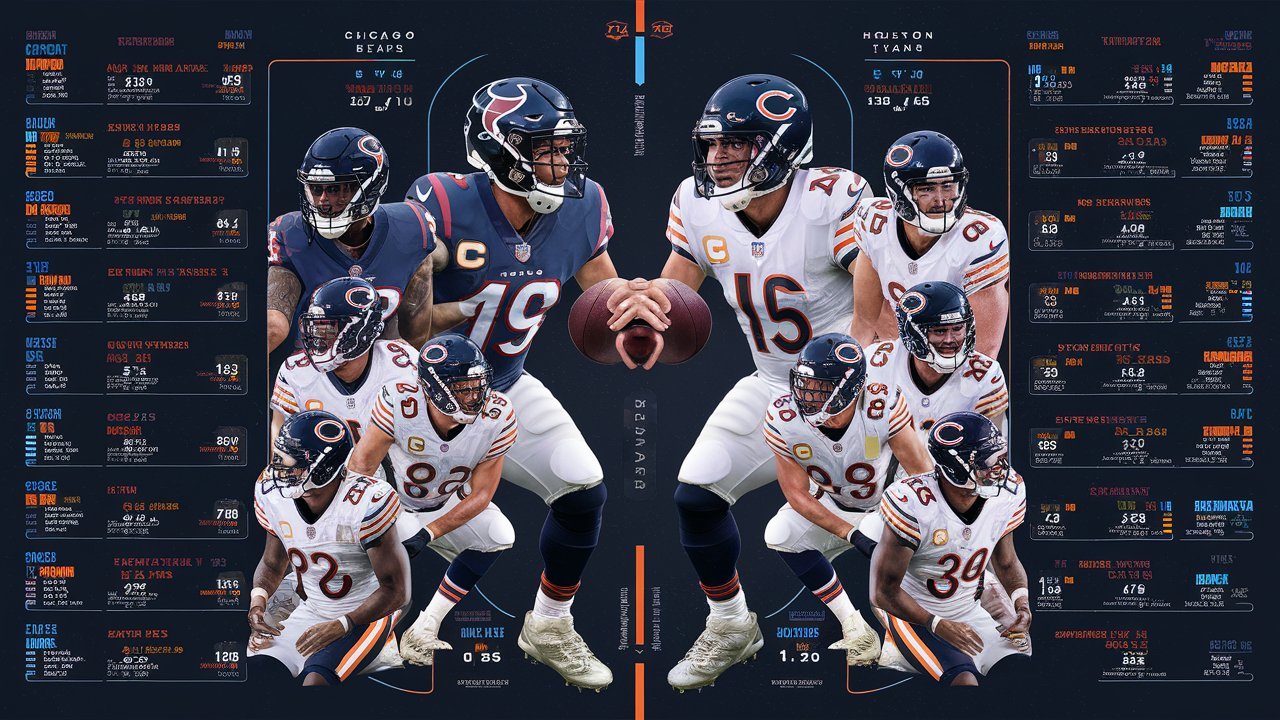
Quarterback Comparison: Statistical Breakdown and Key Passing Metrics
The quarterback battle was a focal point of the game, with both athletes delivering noteworthy numbers that reflect their rising profiles. The Bears’ quarterback achieved a respectable completion percentage, managing the game carefully while still attempting ambitious downfield throws. Several key third-down conversions highlighted his situational awareness. For the Texans, their quarterback delivered a higher passing yard figure, aided by more explosive plays and quicker release timing. Each demonstrated strengths unique to their offensive systems, providing fans with a compelling statistical duel.
Rushing Leaders: Impact Runs, Yards After Contact, and Ground Control
The rushing component played a transformative role for both teams. The Bears’ running backs showcased physicality, breaking tackles and generating first downs through extended plays. Their ability to maintain ball security under heavy defensive pressure highlighted disciplined execution. The Texans’ rushing attack, however, proved more dynamic, featuring faster acceleration through gaps and effective use of outside zones. Their primary back delivered multiple long runs that shifted momentum and contributed significantly to total yardage advantage.
Receiving Standouts: Target Share, Yards After Catch, and Big-Play Potential
The receiving corps on both teams elevated the match’s entertainment value. The Bears’ wide receivers demonstrated strong route-running fundamentals, including crisp breaks and reliable hands during contested catches. Their tight end also became a key factor in short-yardage passing, converting essential downs. Meanwhile, the Texans receivers exhibited explosive after-catch ability, creating separation with quick-release techniques and taking advantage of defensive miscommunications to produce impactful gains. The highlight reels were filled with athletic grabs and sideline acrobatics.
Defensive Dominance: Bears Pressure Packages and Texans Turnover Production
Defensively, the Bears produced several moments of disruption, particularly through intelligent blitz schemes that forced hurried throws. Their defensive line penetrated effectively, generating quarterback hits that shifted the offensive rhythm. However, the Texans’ defense distinguished itself with superior turnover production, including timely interceptions and forced fumbles that altered the course of the game. Their secondary showcased disciplined coverage, minimizing deep-ball opportunities and limiting explosive options for the Bears’ offense.
Pass Rush Metrics: Sacks, Pressures, and Defensive Line Efficiency
In the trenches, the match was a showcase of power and technique. The Bears’ edge rushers delivered consistent outside pressure, collapsing the pocket and forcing off-platform throws. Interior linemen contributed with disruption in running lanes. The Texans, on the other hand, showed exceptional discipline in their pass-rush lanes, preventing scrambling opportunities and maintaining pressure integrity. Their sack totals reflected coordinated team effort rather than reliance on a single dominant rusher.
Special Teams Performance: Field Position, Returns, and Kicking Accuracy
Special teams added additional layers of intrigue. The Bears’ return unit provided valuable field position through smart decision-making and elusive movement in open lanes. Their kicker delivered reliable accuracy, converting field goals that kept them competitive. Texans’ special teams, however, gained an edge through superior punt coverage and strategic directional kicking that forced the Bears into less favorable starting field positions, impacting drive potential.
Key Moments That Defined the Game
Several pivotal moments shaped the final narrative of the matchup. The Texans’ early interception shifted momentum and energized their sideline. Mid-game, the Bears executed a crucial touchdown drive fueled by consecutive third-down conversions. A late-game Texans breakaway run created separation on the scoreboard, ultimately becoming the defining moment that tipped the balance. These sequences combined to illustrate the competitive intensity of the contest.
Conclusion
The chicago bears vs houston texans match player stats was a compelling showcase of NFL talent, featuring standout performances, tactical intelligence, and statistical achievements from both sides. The detailed player stats reveal the story behind the scoreline, highlighting strengths, weaknesses, and the evolving identities of each team. With quarterbacks delivering dynamic performances, defenses producing momentum-changing plays, and special teams contributing essential value, this matchup provides rich analytical depth for football enthusiasts seeking a complete breakdown.
FAQs
1. Who was the statistical leader in the Chicago Bears vs Houston Texans match?
The Texans quarterback delivered the highest passing numbers, while both teams had standout rushing and defensive performers.
2. Which team had the stronger defensive performance?
The Texans produced more turnovers, while the Bears excelled in pressure generation.
3. Were there any major injuries in the game?
No significant injuries impacted the overall structure of the match.
4. How did special teams influence the final outcome?
Field position and kicking accuracy heavily shaped drive results and momentum.
5. What made the Texans’ offense more effective?
Play-action success, timing routes, and balanced rushing contributed to their efficiency.
