
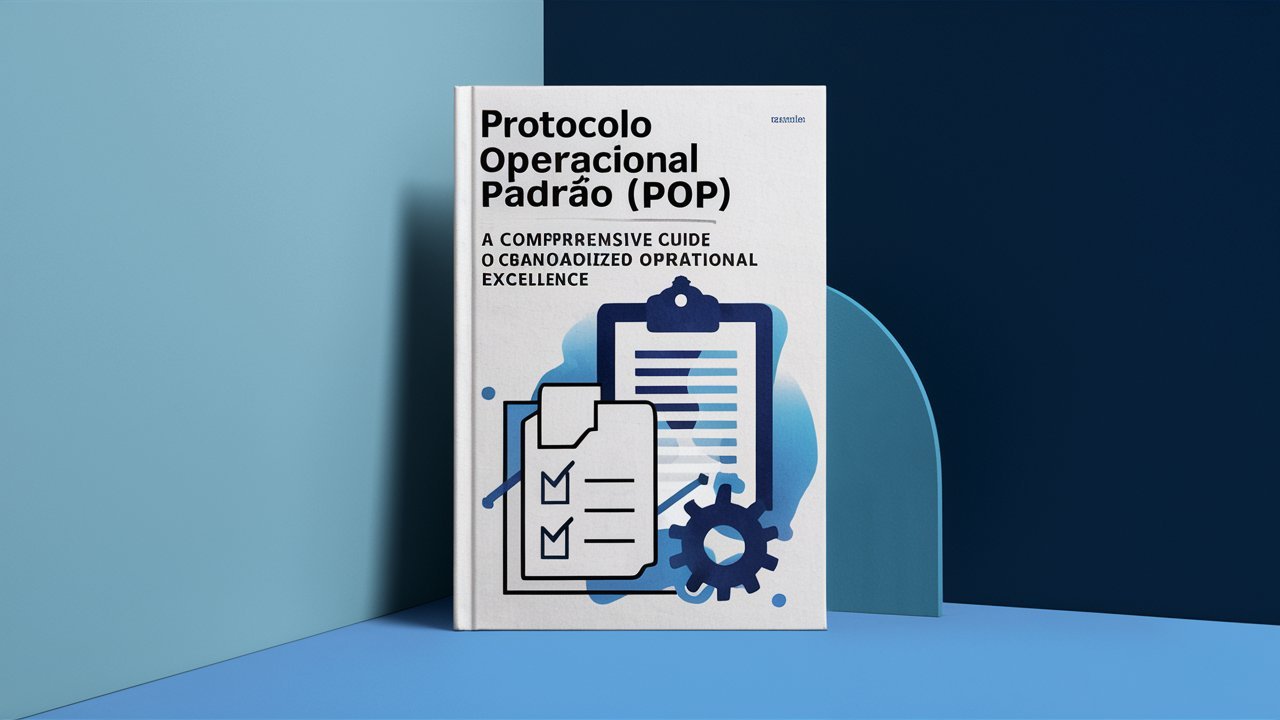
Protocolo Operacional Padrão, commonly known by its acronym POP, represents a structured, documented, and standardized set of instructions designed to ensure consistency, efficiency, quality, and compliance across organizational processes. We adopt the Protocolo Operacional Padrão as a strategic operational framework that transforms routine activities into predictable, measurable, and continuously improvable workflows. By formalizing tasks and responsibilities, we establish operational clarity, reduce variability, and safeguard institutional knowledge, regardless of personnel changes or business scale.
Organizations across healthcare, manufacturing, logistics, laboratories, administration, education, and service industries rely on POP documentation to align teams, mitigate risks, and elevate performance standards. When properly designed and implemented, a Protocolo Operacional Padrão becomes the backbone of operational governance.
What Is a Protocolo Operacional Padrão
A Protocolo Operacional Padrão is a formally approved document that describes step-by-step procedures required to perform a specific activity in a consistent and controlled manner. We define each action, sequence, responsibility, input, output, and control mechanism to ensure that tasks are executed uniformly every time they are performed.
This standardized protocol eliminates ambiguity and replaces informal practices with documented best practices. The result is operational predictability, improved outcomes, and verifiable compliance with internal policies and external regulations.
Core Objectives of a Protocolo Operacional Padrão
Operational Standardization
We use POP to eliminate process variation by defining a single, approved method for task execution. Standardization ensures that outcomes remain consistent across departments, shifts, and locations.
Quality Assurance
A well-structured Protocolo Operacional Padrão embeds quality controls directly into the workflow. We define checkpoints, acceptance criteria, and corrective actions that prevent errors before they occur.
Risk Reduction and Compliance
By documenting procedures aligned with legal, regulatory, and safety requirements, POP reduces operational risks and supports audits, inspections, and certifications.
Knowledge Preservation
We protect organizational expertise by transforming tacit knowledge into documented procedures. POP documents ensure continuity and resilience during staff turnover or expansion.
Key Components of an Effective Protocolo Operacional Padrão
Title and Identification
Each POP must include a clear title, document code, version number, approval date, and responsible department. These identifiers ensure traceability and document control.
Purpose and Scope
We define the objective of the Protocolo Operacional Padrão and clearly state where, when, and to whom it applies. This prevents misuse and guarantees relevance.
Definitions and References
All technical terms, abbreviations, and references are standardized to eliminate misinterpretation and ensure uniform understanding.
Roles and Responsibilities
We specify who performs each step, who supervises execution, and who approves deviations. Clear accountability strengthens compliance.
Detailed Step-by-Step Procedures
This is the core of the POP. We describe each task in logical sequence, using precise language and measurable actions. Visual aids such as flowcharts or tables may complement written instructions.
Materials, Tools, and Resources
All required equipment, systems, forms, and materials are listed to prevent interruptions and inconsistencies.
Control Measures and Records
We define monitoring methods, performance indicators, and required records to support traceability and continuous improvement.
How to Develop a High-Quality Protocolo Operacional Padrão
Process Mapping and Analysis
We begin by mapping the current process, identifying inputs, outputs, dependencies, and risks. This analysis ensures that the POP reflects real operational conditions.
Stakeholder Involvement
Subject matter experts and frontline operators actively contribute to POP creation, ensuring practicality and accuracy.
Clear and Formal Language
We use objective, unambiguous language written in the imperative form, ensuring clarity and ease of execution.
Validation and Approval
Each Protocolo Operacional Padrão undergoes validation testing before formal approval to confirm feasibility and effectiveness.
Training and Implementation
We train all relevant personnel using the approved POP, ensuring alignment and correct adoption.
Benefits of Implementing Protocolo Operacional Padrão
Increased Productivity
Standardized procedures reduce rework, delays, and decision fatigue, allowing teams to operate with precision and speed.
Consistent Quality Outcomes
By following a POP, we deliver uniform results that meet predefined quality standards.
Enhanced Safety
In high-risk environments, POP documents define safety controls and emergency actions, reducing accidents and incidents.
Audit Readiness
Documented procedures simplify internal and external audits, providing evidence of compliance and operational discipline.
Protocolo Operacional Padrão in Different Industries
Healthcare and Clinical Settings
In healthcare, POP ensures patient safety, infection control, medication administration accuracy, and regulatory compliance.
Manufacturing and Industrial Operations
Manufacturing relies on Protocolo Operacional Padrão to maintain production consistency, equipment reliability, and quality control.
Laboratories and Research
Laboratory POP documents guarantee reproducibility, data integrity, and adherence to scientific and ethical standards.
Corporate and Administrative Processes
Administrative POP standardizes workflows such as onboarding, procurement, reporting, and customer service.
Maintaining and Updating Protocolo Operacional Padrão
A Protocolo Operacional Padrão is a living document. We establish periodic reviews to incorporate process improvements, regulatory updates, and operational changes. Version control ensures that only the latest approved POP is in use, preventing outdated practices.
Continuous improvement cycles transform POP from static documentation into a dynamic performance tool.
Best Practices for Protocolo Operacional Padrão Excellence
-
Use clear formatting and headings for readability
-
Keep procedures specific, measurable, and actionable
-
Align POP with organizational strategy and KPIs
-
Integrate feedback loops for continuous optimization
-
Digitize POP management for accessibility and control
Frequently Asked Questions (FAQ)
What is the main purpose of a Protocolo Operacional Padrão?
The primary purpose of a Protocolo Operacional Padrão is to standardize processes, ensuring consistent execution, quality, safety, and compliance across operations.
Who should create a Protocolo Operacional Padrão?
We recommend that POP be developed collaboratively by process owners, subject matter experts, and quality professionals.
How often should a POP be reviewed?
A POP should be reviewed periodically or whenever there is a change in process, regulation, technology, or organizational structure.
Is Protocolo Operacional Padrão mandatory?
In many regulated industries, POP is mandatory to meet legal, safety, and quality standards.
Can a Protocolo Operacional Padrão improve performance?
Yes. A well-implemented POP enhances efficiency, reduces errors, and supports continuous improvement.
Conclusion
Protocolo Operacional Padrão is far more than documentation; it is a strategic instrument that enables operational excellence, consistency, and sustainable growth. By defining clear procedures, responsibilities, and controls, we create a resilient operational foundation capable of adapting to complexity and scale. Organizations that invest in robust POP frameworks achieve superior performance, compliance confidence, and long-term competitive advantage.
